
For much of the U.S. Navy’s past, the opportunities available to African American sailors were dictated not by ability or courage, but by convenience and necessity. In times of war, doors opened—but only partway. Even as African American sailors stepped forward to serve, they faced discrimination, limited roles, and few paths to advancement. Still, they went to sea and risked their lives for a country that did not yet offer them equal footing.
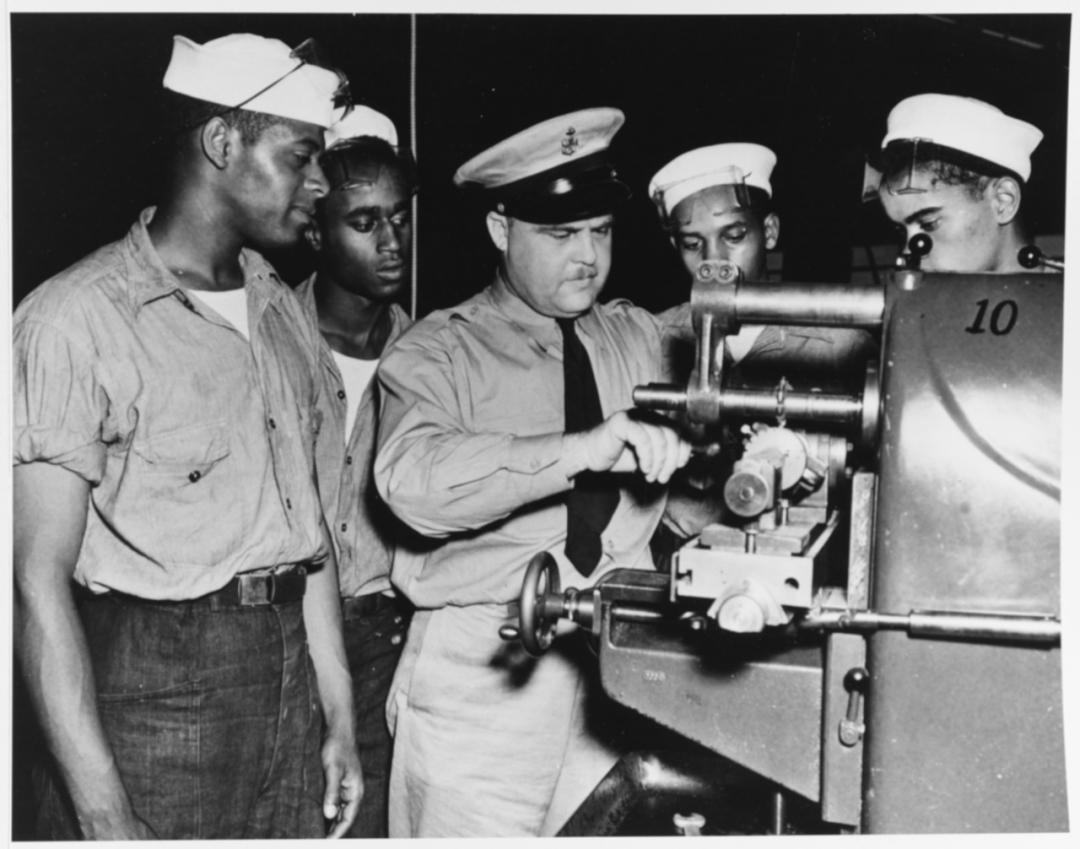
After World War I, as the Great Depression took hold, the Navy closed those doors altogether, barring African American enlistment. On the eve of World War II, African American sailors who did manage to serve were confined to the Mess Steward rating—work that kept them below decks, serving meals, cleaning spaces, and performing administrative duties.
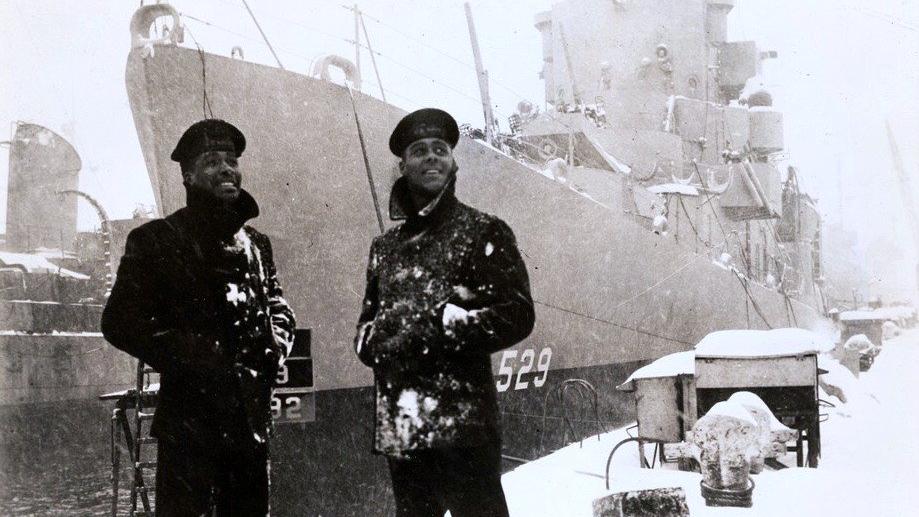
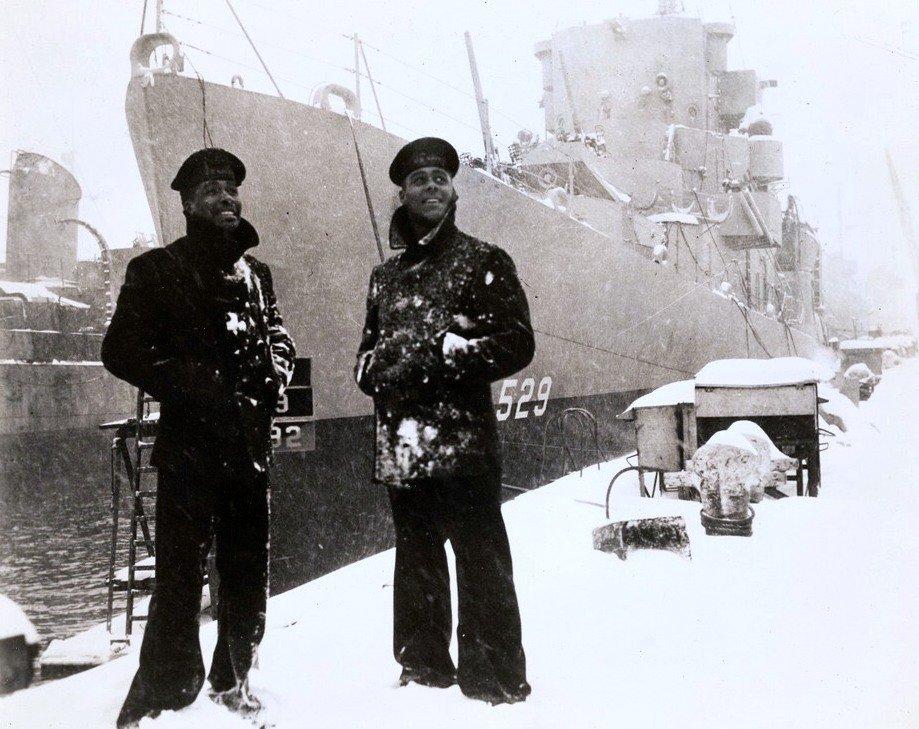
Once the U.S. entered the war following the attack on Pearl Harbor, the NAACP began petitioning President Franklin Roosevelt to expand the roles available to African Americans within the Navy, and on June 1, 1942, the barrier finally began to crack. African American sailors were admitted into regular ratings. Progress was slow, uneven, and often resisted. Out of that hard-fought change came two ships with predominantly African American crews, the submarine chaser PC-1264 and the destroyer escort USS Mason (DE-529).
The USS Mason would become the first U.S. Navy combat vessel to serve overseas with a crew made up mostly of African American sailors, but officer and Chief Petty Officer positions were still restricted to white sailors, and white crew members were assigned separate quarters. The ship was commissioned on March 20, 1944, in Boston, Massachusetts, and soon headed south for her shakedown cruise in the Caribbean, followed by further training off the coast of Maine. On June 8, 1944, the Mason entered Charleston Harbor, where her crew spent a week preparing for the work of escorting convoys across waters hunted by German U-boats.
On June 14, 1944, the Mason sailed from Charleston as part of a convoy bound for England. Of the 204 men aboard, 160 were African American sailors. Over the next eleven months, the Mason escorted five convoys to England and the Mediterranean, standing guard against submarine attack in some of the most dangerous waters of the war. In September 1944, while escorting convoy NY-119, the Mason fought through a brutal storm that tested both ship and crew. Their performance was so exceptional that it earned a recommendation for official commendation, but it would take more than fifty years for the crew to finally receive the honor they had earned, when the Navy at last recognized their service in 1995.
After her convoy duty, the Mason briefly served as a training ship in Miami before returning to Charleston, where she was decommissioned on October 12, 1945. Though her wartime service ended without fanfare, the story of the USS Mason prevailed as a testament to the men who did their jobs in a system that doubted them.
Today, the legacy of the Mason stands as a quiet but powerful truth about the impact of African Americans in naval history. During Black History Month, we honor not only what they endured, but what they achieved, and the doors they forced open for those who followed.
The Mason Hymn
“We’re the men of the USS Mason
And we’re a darn good crew
We fight with patriotic devotion
For our country brave and true
We’re the men of the USS Mason
And we stand for liberty
Full of courage for our nation
We will fight to make her free
As a crew we are tough
And you know we’ve got the stuff
(Give us a chance and you will see)
We’re the men of the USS Mason
And we stand for liberty!!!”